I had a great opportunity yesterday while walking on the wall of the Cardinia Reservoir to test out the reach of my new olympus OMD EM10iii camera, using just two lenses (14-150mm and 75 to 300mm) and a multi-image stitched panorama.
Showing posts with label wideangle. Show all posts
Showing posts with label wideangle. Show all posts
Monday, September 24, 2018


Tuesday, August 23, 2016
Don’t Stand So Close


As a wide angle of a distant screen it is fine, but I’m not really a fan of the fish eye effect on a landscape. However letting it get right upclose (the macro aspect) definitely gives a different, aka interesting, perspective of some familiar items around my studio


Monday, June 09, 2014


Saturday, October 29, 2011
Going Wide Angle on a Cameraphone
For PhotoFriday‘s Topic Wide Angle

I’m sure something like this must have has already been tried. Here I have used 4 photos taken on my android cameraphone, stitched them with Microsoft Research's ICE software and uploaded the resulting image to Microsoft Research's Photosythn. Zoom in with your mouse and look around, not bad resolution for a cameraphone. The big drawback in this image however is the horizon is a very wobbly line.
Saturday, February 14, 2009
Moon over Lake Wakatipu

This morning was still cold in Queenstown and some clouds hung low over the mountains and with the moon still low in the sky. The reflection on the lake was very photo worthy and looked just as good in several increasing wider vistas.


Saturday, January 27, 2007
Is focal length still relevant?
Focal length is seldom mentioned anymore in the same breath as digital photography, the jargon has moved onto times zoom. Not that this is that clear, you have to understand the difference between optical zoom (the lens being able to change its focal length) and digital zoom (just a part of the image being magnified in the camera, without any improved resolution). Even with digital SLR cameras which have interchangeable lens, most people just buy a zoom lens, so they pay little attention to focal length.
Increasing the focal length of the lens you use (either by changing the lens on a DSLR, or zooming in) narrows the field of view and magnifies the subject (making it look closer). Higher focal length lenses are called telephotos. Decreasing the focal length expands the field of view and the image looks further away. Lower focal length lenses are called wide angle, because of their wider angle of view.
So here is a demonstration of the magnification and field of view obtained with different focal length. To fully appreciate the difference in magnification involve try if you can see the small "turret" on the house in the middle on the first image at the top, in the final image at the bottom. You will need to click on the images to see the larger versions.
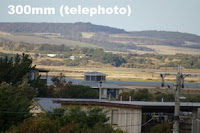

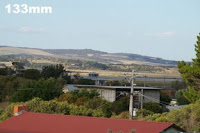

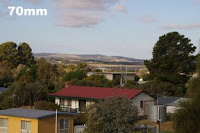


Whilst a 50mm lens best matches the perspective and magnification of the human eye on older 35mm film cameras, a focal length of 33mm approximates the normal human vision on a digital camera, which has a smaller CCD sensor area.
If you are interested you can find the focal length used for images in the EXIF data embedded in most Jpeg or RAW file formats these days
Changing the focal length also changes the perspective but that can be the topic of another post.
Increasing the focal length of the lens you use (either by changing the lens on a DSLR, or zooming in) narrows the field of view and magnifies the subject (making it look closer). Higher focal length lenses are called telephotos. Decreasing the focal length expands the field of view and the image looks further away. Lower focal length lenses are called wide angle, because of their wider angle of view.
So here is a demonstration of the magnification and field of view obtained with different focal length. To fully appreciate the difference in magnification involve try if you can see the small "turret" on the house in the middle on the first image at the top, in the final image at the bottom. You will need to click on the images to see the larger versions.


Whilst a 50mm lens best matches the perspective and magnification of the human eye on older 35mm film cameras, a focal length of 33mm approximates the normal human vision on a digital camera, which has a smaller CCD sensor area.
If you are interested you can find the focal length used for images in the EXIF data embedded in most Jpeg or RAW file formats these days
Changing the focal length also changes the perspective but that can be the topic of another post.
Monday, December 04, 2006
A wide angle lens for free

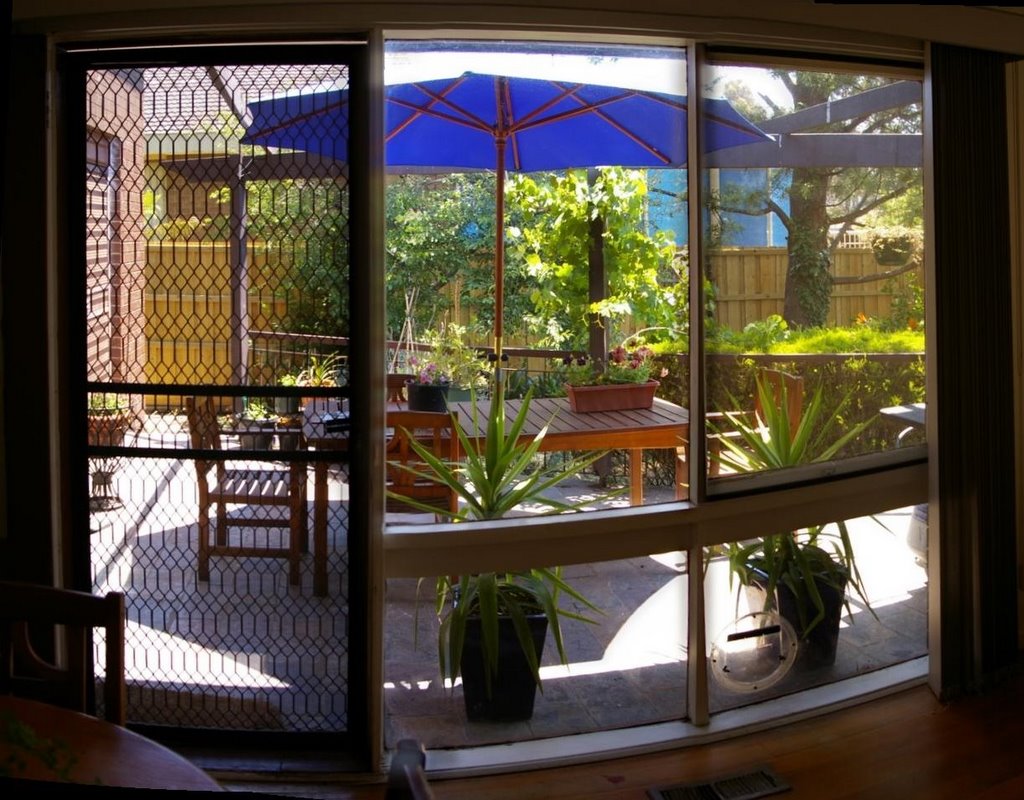
Don't despair if you find yourself in a situation where you can not step back far enough and you wish you bought that expensive wide angle lens. There is a very simple (and cheap) alternative. Take two or three photos and then stitch them together. These where taken with my pentax (so I could not use my "old faithful" olympus specific autopanorama program). So I used the demo version of autostitch program.
Close and strongly vertical or horizontal shapes (such as windows and door frames) will always be difficult for such software to match up exactly, because of parallax issues. So try to focus on subject that don't involve them (eg they are just there framing the image, or not part of the main subject and composition)

Subscribe to:
Posts (Atom)