Showing posts sorted by date for query AIart. Sort by relevance Show all posts

Saturday, September 13, 2025

ASI: The Good, The Bad, and The "AIslopocene"

It should be clear I have mixed feelings about AI these days. I love some AI applications. Photo editing tools? Fantastic! On-line apps that help clean up my dyslexic writing? Impressive!


But here's what's bugging me: Large Language Models (LLMs) are becoming a real problem. They're scraping everyone's creative work without permission, then spitting out convincing-sounding nonsense that's often completely wrong. We're heading into what many are calling the "AIslopocene", an era where slick, AI-generated content floods the internet while actual creators get nothing for their stolen work.

The worst part? Big tech companies are making billions by building expensive gateways to these models while contributing zero original content themselves. Meanwhile, the models are trained on everything from conspiracy theories to biased opinions, sometimes producing genuinely dangerous outputs, like when Grok started spouting Hitler's ideas.

I've been working with AI since the late '70s, so I'm not anti-technology. But what we're seeing now feels more like ASI, Arte-ficially Superficial Intelligence. It looks impressive on the surface but lacks real depth or understanding.

That's why I'm being transparent about my AI use. I've been hash tagging my #AIart since 2017, using specific AI icons/watermarks over images since 2023, and now adding footnotes when I use AI tools for editing or research.

I believe in ethical AI tools that genuinely help people while respecting creators and truth. But we need to stay vigilant about what's real intelligence versus what's just a shiny illusion designed to keep us scrolling.

Proof reading and summary assisted by Claude Sonnet 4 (AI)

Thursday, May 29, 2025

What's Next for AIart? (Dystopian Surprise!)

Lately, I've been a bit out of the loop with the rapid developments in generative AIart. Life threw a curveball with some eye issues and a corneal graft, which severely limited my computer time – even with NightCafe's regular emails urging me to claim my daily free credits.

My vision is improving, and I decided to jump back in by following one of NightCafe's invitations. This time, the free credits led to another invite to join one of their weekly challenges; they even pre-filled a prompt for me! I only caught the first couple of lines but decided to see what might happen. I'd previously experimented with prompts about AI/robots making art, so I wondered if that had "seeded" my new prompt, or perhaps another AI had "scanned" my earlier work on NightCafe (nothing impressive, just me playing around with the generative AI tech, by the way).

AIart generated via flux

The image generated quickly, and I was genuinely taken aback by how dystopian and depressing it felt. It struck a chord, echoing my own concerns about the "look-at-me" culture of celebrity-seeking masses, which often feels like a desperate race to the bottom. Are we, as real artists, being replaced by soulless images churned out by "pseudo-intelligent" applications, all designed to grab attention so that advertisers pay more? Was I becoming just another cog in a process, simply there to click a link or hit enter?

"A melancholic robot with glowing eyes, standing in an abandoned art studio, surrounded by discarded paintbrushes and canvases, with a single tear of oil streaming down its metallic face, in the style of surrealism, with melting clocks and distorted perspectives, reminiscent of Salvador Dali, with a matte background and a somber, introspective mood."

Upon looking at the full prompt (above) and selected Flux model settings, I realised this prompt was likely just a refinement of my last work from a month or so ago (when I was effectively blind in one eye), rather than a new AI "spoon-feeding" me. The original prompt was: 

"a blind artist being assisted by an AI robot to create a large abstract painting surrealism Salvador Dali matte background melting oil on canvas."

AIart 4 options generated via Dreamscape XL
I had used the Dreamscape XL Lightning model, a diffusion style model I was starting to like. However, the results weren't very Dalí-esque. A couple of the generated options had reasonable likenesses of Dalí, but nothing suggested he was blind or that a robot was assisting him. he just looked sad. Plus, the backgrounds were sharp and detailed, not melting, surreal or painterly. Was I to blame?, "Does my prompt need refining?" Yeah-Nah I just lost motivation and stopped.

Perhaps this is the true moral of the story for the artistic and creative communities: Keep an eye on what's going on, but don't worry too much. There's a lot of real life happening away from your computer or phone screen, and it's okay to let the over hyped generative AIart 'race to the bottom.' A bit sad really, if we want to benefit from the technology.

P.S. I even used Gemini Ai (Gemini 2.7 Flash) to help fix up my dictated jipperish for this post!

Monday, July 08, 2024

Have You Been Scraped? Uncovering AI's Training Data

In the age of generative AIart and large language models, the question of concern for any creative artist (I am loath to call them "content creators" but social media does): 

Has our work been used to train AI without our knowledge or consent? A new tool offers some answers and a way to take action.


The website haveibeentrained.com allows users to search through vast, publicly researched AI training datasets like LAION 5B using text prompts. Curious about my own digital footprint, I decided to give it a try.

https://haveibeentrained.com/


Searching my name yielded numerous images from other Norm Hansons, but among them was a familiar face—my own. A self-portrait rock painting I'd posted long ago as a profile picture on Artists at Large had made its way into the dataset. While not overly distressed by this single instance, it did give me pause.

More concerning was the discovery that my charcoal sketch of Sir John Monash, created for an exhibition in 2018, had been scraped from my website. This unauthorized use of my work felt like a violation of my artistic rights.


Fortunately, the website offers a small measure of control. For individual images, users can tick a box that adds the image to a "Do Not Train" register, signaling to participating groups that you don't want your work included in future neural network training sets. For broader protection, entire domains can be registered.

It's worth noting that these actions are somewhat akin to closing the stable door after the horse has bolted. The data has already been used in training existing models. However, it's currently our best option for protecting our work moving forward.

This situation highlights a critical need for transparency and ethical behavior from those creating large language models, whether for legitimate research, commercial interests, or other purposes. As AI continues to evolve, so too must our understanding of its implications for creative rights and data privacy.

Have you checked if your work has been used in AI training datasets? Share your experiences and thoughts in the comments below.

Friday, August 18, 2023

The hyper-real, as a replacement for our photographs?


I was out scouting for my last photowalk, on a bright winters day with virtually no breeze. The Jells Park lake was forming a beautiful mirror with strong reflections. I am also testing out the new Skylum Neo extension for creating a multi-image stitched panorama, its nice and much faster than the stitching routine I'm currently using in ON1 Photo RAW.

Things are changing fast in generative AIart all the time and I was also testing out the latest version of Stable Diffusion (model SDXL 1.0) on Nightcafe studio and thought a sunny winter's scene like the above would make a good test. I used the text prompt -

"bright winter blue sky, some clouds over a still lake with strong reflection, yellow ochre grasses in foreground, Professional photography, natural lighting, shot on micro four third digital camera sharp focus"


With the above photo being given the defaults of a 50% Prompt Weight and 50% Noise Weight as the starting diffusion image for the generative process.

Certainly the capabilities of these generative AI systems has become really great, the detail is definitely starp and the reflections undoubted strong. However is it just a bit disturbingly too much on the hyper-real side?

"Hyper-real: More real than reality..." Brookes Jensen, Lenswork PodcastLW1362 - The End of the Trail, Sort Of

Tuesday, April 11, 2023

Co-incidence or Urban Myth?

"Google recognizes posts created from ChatGPT and downgrades them in search"

I've seen similar comments on several Instagram reels (I'd never followed them by the way they were pushed at me), google news, youtube and a couple of blog posts. Sounds like a bit of viral hype/myth to me but thought I would check my blog stats.

Well isn't that a coincidence?

I still doubt that things are moving that fast, and are so competitive. Maybe they are. There does seem to be a race to claim technical dominance of the ChatAI and AIart fields. Also I'm not sure I yet trust OpenAI to be driving the developments, there are the issues of secrecy, open letters by many important people and experts to have a pause in building of bigger models and not forgetting the whole issue of the ethics of scraping the uncensored net for data. Finally, it is logical that having the training of these deep networks based on these unverified sources include all the bias and unfettered untruths that are increasing within the unrestricted websites and social media, with many of those publishing "content" hiding behind anonymity, What should we expect?

Personally, I'm not thrilled that Google might be one potentially trying to dominate yet another field/service that so many people are flocking towards. Google has an extensive history of introducing new things and then killing them, They prefer to call it deprecation.

Anyway I'm suspicious it might be true and I rather let those interested find my thoughts rather than have to get through an unnecessary layer of possible google "censorship". So no more blog posts written (or even reviewed) by ChatGPT. I'll still be investigating how artists and photographers might use and be affected by this technology. 

So, if you are interested in my opinion please stick around.

Sunday, March 19, 2023

The Shape of Things to Come?

I’ve left to last, writing about aspects that I believe Ai techniques should be applied for photo editing and management in the future. The movement to apply different Ai based refinements into existing tools (eg masking, blending etc) will definitely continue. What I would love is to be able to train my own AI with my style of processing images and being able to supervise a more automatic “workflow” to suit both the photograph's content and my objectives.

Ted Forbes of the YouTube channel “The Art of Photography” has reviewed a new AI based photo editing offering called Imagen AI


This does sound a lot like something I have been looking for, a service that will automatically create edits for you using your styles (or generic “talent profiles”). At present, it appears very much aimed at bulk usage cases like event and wedding photographers and specifically from Lightroom. I hope the methods can be taken further, expanded to be more general and interfaced with other software/starting points.

So this is interesting, but not immediately helpful for me (whilst I do have an old version of Lightroom still but never use it) and I’m not holding my breath that it might become the next big thing.

Google have now also released its own text-to-image service also called Imagen, It's a competator for other similar AIart and whilst appropriate prompting can elicite photo-realistic images it's unlikey to be interest to or useful for most photographers.


Wednesday, March 01, 2023

Exploring the Capabilities of Diffusion-Based AIart: OUTpainting

This will be the last post in my AIart series for now. I have been investigating the use of artificial intelligence (AI) to create stunning works of art. In particular, diffusion-based AI art has been gaining traction due to its ability to create realistic and artistic images.

Two additional features have became available under the diffusion process, INpainting and OUTpainting. INpainting involves removing a section of an image and replacing it with something that blends into the space. It is similar to context-sensitive replacement, as used in Adobe's software. On the other hand, OUTpainting involves adding extra areas outside the reference image in such a way that they seamlessly blend onto the image.

OUTpainting is particularly appealing to me here as it allows for the expansion of tightly cropped reference images. Expanding the image to a more classic still-life composition, playing with shadows and lighting to create a more realistic image. For instance, adding two full shadows, to give the image more depth and dimension.
I used Dall.E 2, at the openai website, as it is the most up-to-date version, which can add in extra objects to the image, such as a vase of flowers or a bowl of fruit etc, while still maintaining the original image's aesthetic.  Futher, Dall.E produces more photo-realistic images than some of the other diffusion-based AIart.

So my conclusion, text-to-image and particularly diffusion-based AIart is opening up new possibilities as a great tool/media for artists and enthusiasts alike. It's not a magic one-click to a masterpiece. It might be a shiny new toy for the wanna-bee celebrity artist, NFT worshippers or even those just wanting more likes on Instagram, The shine will soon wear off. By understanding and utilizing INpainting and OUTpainting features, we will all be able to create stunning and realistic images that were previously very difficult if not impossible to achieve. With technology continuing to advance, it will be interesting to see what other features will become available under the diffusion process or next AI advancement, and how they will be utilized in the world of art. I don't think the sky is falling in.

Tuesday, February 28, 2023

Using a reference image within AIart IV

I’m returning to google’s Deep Dream Generator again and this time using the same Lilly photo as my reference and using their Text 2 Dream tab and the prompt “Watercolour painting in the style of John Singer Sargent.”


This one really hums.  The layout/composition has been altered a little, and the flowers are more Roses than Lillies BUT I can see it has added some butchered signatures, All is not perfect, YET!

My next post will return to Dall.E and investigate the feature of Outpainting.

Monday, February 27, 2023

Using a reference image within AIart III

The world of image-to-text systems has been revolutionized by a new technique called Diffusion. Originally described as a Latent Diffusion Model, Diffusion has been widely adopted for its ability to encode training images into an encoded noise latent space, from which the system can then correctly decode the resultant images.

Night Café is offering a few techniques that take this a step further. These techniques have a diffusion-like ability, to begin with, a reference image with limited noise added, rather than starting with random noise. Night Café offers two diffusion approaches that start with a style image: Coherent and Stable Diffusion.

To understand the significance of this development, let's take a closer look at how Diffusion works. The core idea behind Diffusion is to train a neural network to predict the next pixel in an image, given the previous pixels. This process continues until the entire image has been generated. But unlike other image generation techniques, Diffusion is not limited to a specific set of images. Instead, it can generate an infinite number of images by starting with a random noise vector and decoding it into an image.

This is where Night Café's Coherent and Stable Diffusion techniques come in. These techniques allow the system to start with a style image, rather than random noise, and generate images that are coherent with that style.

Coherent Diffusion works by blending the style image with random noise and gradually removing the noise until the final image is generated. The result is an image that shares the same style as the reference image.
Not quite what I expected! Then I realize Norman Lindsay did paint a lot of scantily clad sirens!

Stable Diffusion, on the other hand, works by gradually adding noise to the style image until the final image is generated. This technique is particularly useful for generating images that are similar to the style image, but with slight variations.
In conclusion, Night Café's Coherent and Stable Diffusion techniques are a major breakthrough in the field of image-to-text systems. By allowing the system to start with a reference image, these techniques offer a new level of control and precision in image generation. The possibilities for creative applications are endless, and we can expect to see even more exciting developments in this field in the future. My next post will return to google's deep dream generator and its newest feature Text-2-Dream.
With thanks to Chat GPT which was able to translate my techno babble into easier-to-follow plain English (but I did have to correct it in a few place, so generative text AI is not perfect yet either). I left in its enthusiasm in the last paragraph even though I still have some reervations.

Saturday, February 25, 2023

Using a reference image within AIart II

In the previous examples, I could see that the very basic style where being found but the Lillies had a wonderful colouring and I wanted to include that. So it was over to Google Image search looking for “pink flowers” “painting” and “Still life”. There were hundreds to search through but I soon found a link to a great watercolour demo by Barbara Fox. Not only do I have the "right colours" I also have the pigments used and a step-through of Barbara's painting processing. 
How would the Style Transfer AIart do?


Well wow, not bad. This is really generating a rich feeling for the subject, looking somewhat reminiscent of Norah Heysen's work.

My next post will look at a slightly different approach usually called Diffusion, that involves developing a latent third network.


Friday, February 24, 2023

Using a reference image within AIart I

Artificial intelligence (AI) has been making great strides in recent years, and one of its most fascinating applications is in the field of art. (AIart) With the help of generative adversarial networks (GANs), we are able to create art that is completely unique and unlike anything that has been seen before.

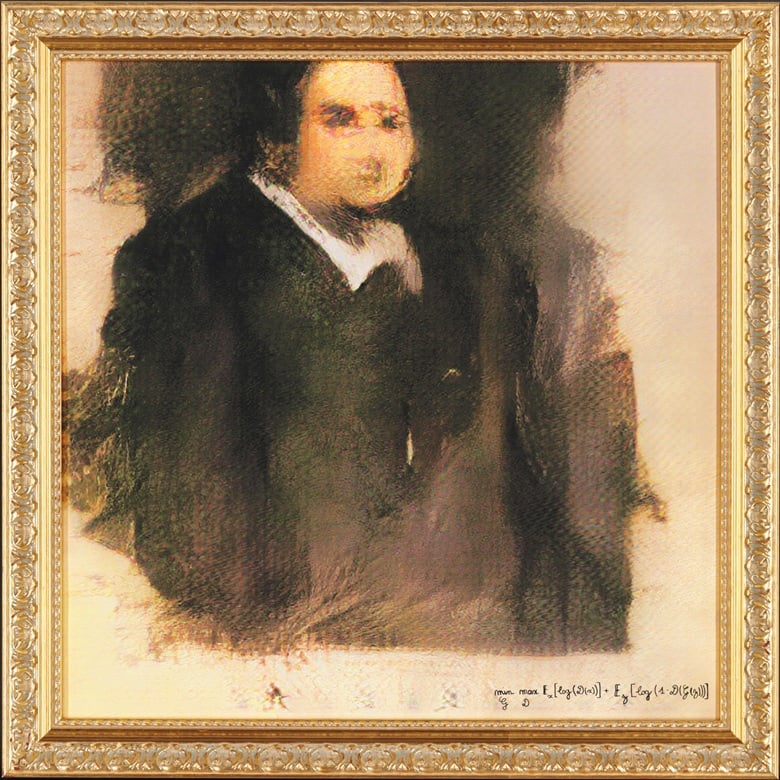
Most earlier neural networks used a general approach of starting with random noise. Early attempts, such as Portrait of Edmond de Belamy (2018), fetched a whopping US$ 350,000 at auction. However, these early attempts were crude and took numerous iterations. This approach uses two networks: the first is trained on images, called the generator, and the second scores how plausible the result of the iteration is, known as the discriminator. This approach is usually referred to as GAN (Generative Adversarial).

 The generator's job is to create images from random noise that look as if they could have been real. The discriminator's job is to differentiate between the generated images and the real ones. The two networks are trained together in a feedback loop, with the generator trying to improve its results and the discriminator trying to get better at identifying the generated images.

A slightly simpler approach to creating art with neural networks is to build a smaller network based on a single image or a small number of images from a specific artist. This approach is simpler than starting with random noise and can produce stunning results.

Back in 2015, German researchers from the University of Tubingen discovered that the earlier nodes of neural networks trained on images looked mainly at basic picture elements such as line types, shapes, directions, tones, and colour. These elements collectively made a good representation of "style". This means that by training a smaller neural network on a specific artist's style, we can use an existing image as the starting point to generate new artwork in the style of the artist works use.

Google's Deep Dream Generator was an early adopter of this approach and offered a Deep Style tab to perform this. Many other systems now exist that promise to interpret images, like your selfie, in the style of famous artists, for example.

In this example, I’m using a simple black and white pen sketch of my own, to control the line work but samples the original image colour. Its about what I expected and not exciting, I did however like the unexpected suggestion of a face showing up in the flower on the left.

Created with Google Deep Dream Generator

Style Transfer is available at Night Café, and in these example I used it for two different style reference images. The first, I'm starting with a different flower photo and again using my tree sketch, only this I'm using the option to make a short movie of the iteration involved in "finding" the resulting image.


In my last example I'm using a lesser-known Vincent Van Gogh's still life (why do so many start with Vincent’s work in  their exploration of AIart?)  

This time the results are stronger and closer to something that might be considered good more spontaneous art. But still not really impressive. 

In my next post I will look at trying to get a better colour likeness in the result.

Thursday, February 23, 2023

Delving Deeper into the Worlds of AIart

 As the world around us changes rapidly, it's important to keep up with the latest technologies and trends. That's why I decided to delve deeper into the world of AIart, exploring the various offers and services available. Specifically, I've been experimenting with three of the current top AIart tools: Google Deep Dream Generator, Dall.E 2, and Stable Diffusion.

To test out these tools, I've been working with a local group of artists who meet fortnightly on Zoom to paint from a photo. Jeannine Desailly, a co-founder of our little Wednesday Wanderers painting group, kindly supplied a set of photos to paint. I will base my experiment on them.


My first step was to send a suitable prompt “pink lilly still life” to Dall.E 2. While the result was superficially impressive, there were a few things not quite right about the output. The image was overcropped and a little too zoomed in, it lacked the esthetics and composition of a still life subject.

But I'm not giving up on these AIart tools just yet. In my nextpost, I'll be exploring ways to "assist" these tools using these reference images. Stay tuned!

Wednesday, January 18, 2023

Can AIart be considered an artistic tool?

Despite the overwhelming impression you might get from just reading the latest social media post that there are two sides to the current #AIart cognitive dissonance.  The artist Luddites, who are claiming their creativityis being stolen versus the non-artistic utopians who think that text to image prompts lets them make great art in seconds. However, there is a lot of ground between the two camps.

I have worked with and spoken to other artists who have been very interested in what this new text to image tools, like Dall-E or Stable Diffusion can do. Many have been investigating these techniques as legitimate ways to create expressions of their unique creativity. In other words, is there life in these approaches as a tool. In my opinion it's not a simple yes/no answer but there is promise.


I have actually been interested and evaluating AI for a long time. I was even very early using the hashtag #AIart. In particular I have experimented with the idea of using such machine learning to capture the essence of my style of mark-making and “find” that within photos I have taken. This is one of the areas of what I have investigating under the “hand drawn photo”project. This method definitely has merit. Below is an example I created at nighcafe using their style transfer method. 


I starred with a handrawn image of an eagle's head I drew for Inktober. This was then used to “train” a simple neural net. I also supplied a photo, a self-portrait, which I had used as inspiration for myrevised profile on instagram. The training of the personalised network has to be scheduled on to suitable computer somewhere about on the internet and does take a while so the resulting image is not returned immediately. It is worth waiting for because now I have a black and white rendering. In my style of inkwork is closely follows the tones and shapes of the photo. I printed it on a laser printer and then hand-coloured it with my earth-coloured Ecoline Brush pens. I would consider this a work of my own art, but I have used some aspects of #Aiart in its creation.


Sunday, January 01, 2023

Why I'm not too concerned about the current #AIart


I don't consider these overhyped bitmaps to be magic or even that intelligent. When we see the results of these text to image services, we are looking at a fairly straightforward machine learning neural network application, albeit on a massively large training data set scale.

The data sets are so large and were scrapped together so quickly, without curation or even human review that they contain a lot of straight rubbish and often the darkest side of human behaviour. Whilst this is unpleasant it will be difficult to fix without starting again but there is a taint of not quite right. Importantly, a lot of the material used in the training was copyrighted but that was ignored as it was scrapped and fed into the neural nets. This is legally questionable, but the big money potential may spend this small problem away.

I think it is the lack of ethics in not attributing or even asking artists if they wish to contribute, that could be the undoing of the magic. If the majority of those consuming the images on the net don`t care or have already scrolled over the issue in their cosy little social media bubble, nothing will happen. However, if those looking also see the discussion of unhappy artists and appreciate the widespread collection and indiscriminant use of existing art renderings (style and colour, not cut and paste copies). Perhaps they might investigate and get a whiff of what is so on the nose. Let’s hope so.

Wednesday, December 21, 2022

Opt-in & Opt-out Talk about #AIart and Have I Been Trained website

 Nothing brings the finer points of a debate into the spotlight than personal involvement.

The big AIart news of the last few days is that Stable AI will allow artist to opt out of being included in the next dataset being used to train the neural network to be used for Stable Diffusion 3. Well at least you can opt-out for the next couple of weeks, so follow this up now. 

There is a site, that can check whether you have been included in the massive Laion-5B & Laion-400m neural networks used in Stable Diffusion & Google's Imogen, yes they were trained on 5.8 billion images. I haven't established its legitimacy as an ethical stance, but it does seem legit. It doesn't appear to be a sneaky way to get more images (with so much hacking and phising establishing trust is a big issue in the #AIart discussions)


However, when you see you are one of the artist whose images have been used to train the Lioan Neural Network and had no idea they are in there, some things suddenly confront you.


It took me very little time using the image search feature, to find two of my works. They were part of my Retracing Darwin exhibition in early 2010 and very early examples of my personal technique I call photoimpression. I actually don't mind if others study my method and even create examples of their own. I would like them to acknowledge me, which is becoming a hollow wish on today's web. I don't blame redbubble either, I am sure they didn't know and/or had not given permission either,

I really don't want my work, especially my own special techniques, style, mark-making colouring or composition used without my permission. This is the stuff that makes my work original. Firstly because I know I'll never be acknowledged, that others could profit from this work or contribution to this work to what is presented as their original, I also actually find a lot of the so-called art generated by these AI's a bit scary and I don't approve, and finally I find the whole process a bit morally questionable and not ethical.

So I've made up my mind, Now I do want to opt out.

Now I have to find out how

Damn! I have to do it image by image. Cest La Vie

Friday, December 16, 2022

AI moving fast and probably in the wrong direction

The developments in AI (well large-scale machine learning in natural language and image generation areas) have been astonishing. However, the "viral" usage seems to be sliding towards that all to common race to the bottom. Well, several bottoms, exploiting others to make money for nothing, chasing fame and likes, selling  AIart as NFTs and now creating and selling books (children's stories in fact). All that as others question the ethics and legality of profiting off someone else's work.

Today I became aware of two books that have been raced into production using these AI tools. (I say this confidentially because the tools to create them have only been available in recent months and the better version in the last weeks)

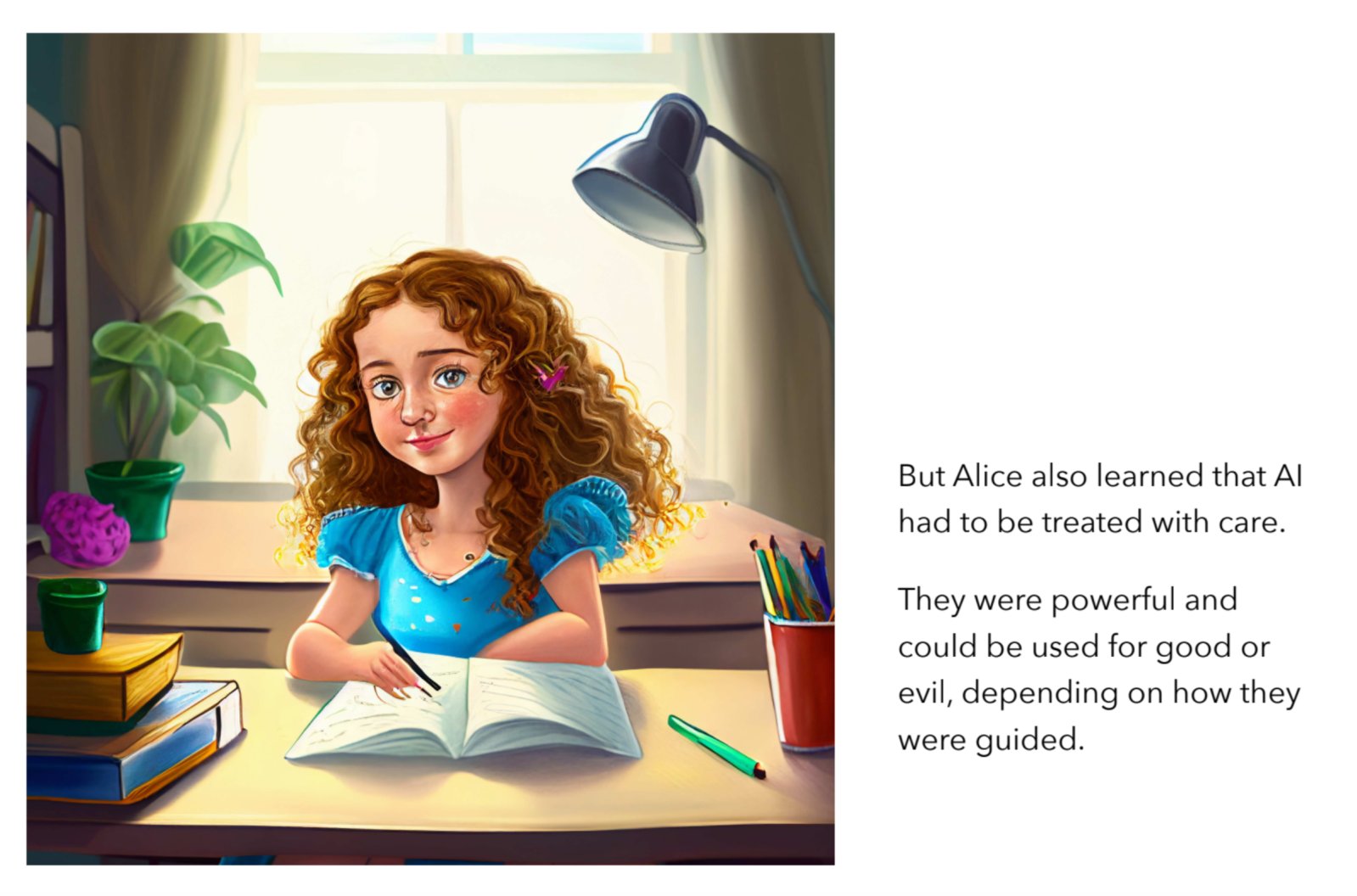
You can read a wordier (somewhat promotional) story about creating the book on Time (its a pay wall site and wants you to subscribe but you can read this story for free, just ignore the all the ads). The book Alice and Sparkle follows a young girl who builds her own artificial intelligence robot that becomes self-aware and capable of making its own decisions. Ammaar Reshi used ChatGPT, Midjourney and other AI tools were combined to create the book. At the time the article was written he had sold about 70 copies through Amazon since Dec. 4

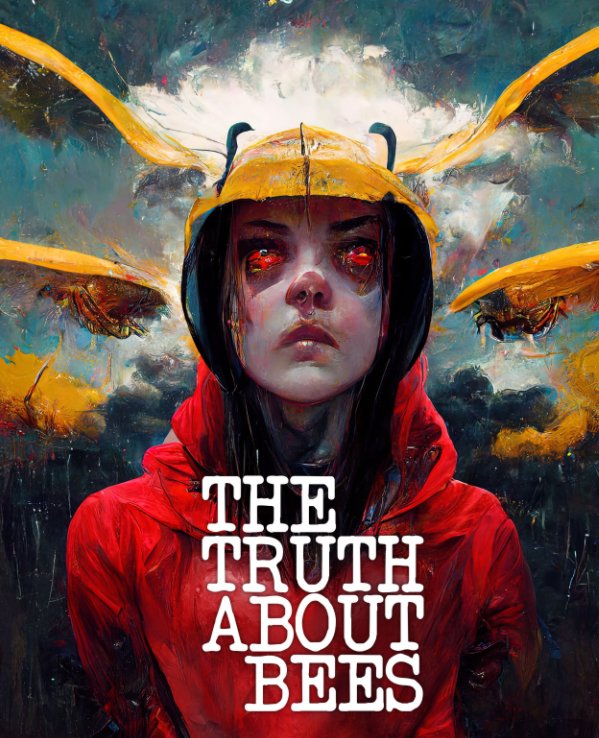
This was in the normal Blurb email mailout. Guess what it's about dystopian bees. Story by the child of artist Mark Terry and art by artifical intelligence tools. It not exactly cheap but you can get your print on demand version already on Blurb

"I think this book is a glimpse at what anyone can do with merely some AI software, basic Photoshop skills, and an idea. If my [idea] can be turned into a book, then I'm sure your far better ideas can, too!"

—Mark Terry of The Truth About Bees


In the other camp are many unhappy artists ask the question why are these people profiting from our work when we are ignored? Afterall all machine learning system get fed a lot of work created by humans, that's what they learn from. 

So is this straight-out plagiarism? Well not exactly because of the way most Text to image AIs work. They are not directedly copying the "pixel" (or actual marks made) they are learning from a translated space (not the graphic one we see) with an emphasis on things like style, colour choice, composition constructs etc. The Ai then builds the objects "as if" they were painted by a given artist following their style, or a particular photographer or illustrator etc. even just following a generic artistic, cinema, computer game "look". In legal terms this may not be considered as copying (as argued by well-paid lawyers).

What is clearer is the lack of ethics. Profiting (and they can be large profits) from someone else's work and in most cases not even acknowledging them is poor form, not moral and unprincipled. I don't think it is too late to fix this. The argument that the dragon has been let out is valid. Artist should be told (or at least able to find out) if their work in involved in a given neural net and that they can ask their work is removed and the net rebuilt (similar to a take down notice). This will require the licening or similar (we already have creative common licnes) and any the big internet groups applying them to any "content" they make visible on the wider internet. We also need to quosh the idea that anything on the net can be copied and reposted without permission.

Yet I do see that there is great potential for many artist being able to use these Ai tools as aids to improving their skills, helping with inspiration and understanding, and even making their own unique tools on a much smaller scale. As Alice's story says there is power in these tools which can be used for good and evil, depending on how they are guided (what they given to learn)

Friday, November 25, 2022

When "good enough" isn't really.

The general vibes I am getting back from my fairly intermittent and probably very personalized investigation of the massive deluge of commentary on "text to image" AIart is that of two extremes. Those vehemently against it (with the argument that it will be the end of artists, whatever that means) and those who see it as a wonderful new technology (bringing artistic creation to everyone). I don't agree with either. Like all technology there are pluses and minuses.

Created with Google
Deep Dream Generator

Let's begin by discussing a small personal project of my own. Can AIart tools be used to inspire my creativity? Specifically help me create a new cartoon character, I'm just using a simple prompt.

"cartoon of a watercolour artist painting with red hat"

I submitted this to a number of the more popular AIart tools. I definitely didn't expect similar results as I have been following most of the technical issues how each system has been created. The biggest difference is the data selected to train the neural networks, and remember there are usually two neural nets, one to review images (usually scrapped fairly randomly from the broader web, and the second to analyse associated text (usually within the websites or social media posts as an alternate text caption). Finally, it is very important to recognize that these systems are not copying the original images or even parts of those images. In the case of the image-based network it is just using "abstracted" dimensions (descriptors) that allow it to differentiate or group parts of the image. A previous post includes a video that explains these steps clearly. These could be shape, colour, texts, line ... I'll call them patches of style ... or perhaps how marks are shown might be a better description. Well, the results are a lot different.
Created in Nightcafe using a variety of methods but the same prompt.

First all these differences must make everyone realize that the common generic argument that these are copies or "rip offs" of an artist work, are largely uninformed ("fake new" in social media speak). Clearly, they are different because the neural nets were trained on different & very large datasets. In fact even submitting the same prompts can produce differences within a given tool. They are less copies and more just appropriation of some machine recognizable aspects of the style. You can quickly get into very muddy waters if you try to label this plagiarism, but even so I suspect5 legally this is a grey area.

The second myth to debunk is that because some of these systems are open source and free they are not promoted by greedy profit oriented vested interests (aka wannabe venture capitalist silicon valley types). Despite all this, yes all systems, restrict the number of free prompts you can submit and then offer ways to "buy" more "credits". To make it more game like you can "earn" credits sometimes by continuing to stay on the websites or use a specific part of their services. The really big costs in these systems are not really generating the work (although it might require more power/performance than the average PC or tablet today) it is the collating of the data and neural network training with millions of images and thousands on dimensions for characterization. These big projects requiring many people and seriously massive computer resources. Conveniently, a lot of this data is based on research projects, usually at universities and made available to the community relatively free of restrictions. I don't understand what is going on here, I do suspect some vested interests are deeply involved in academia, but I will restrain my suspicion until I know the work is noble and working towards a better future..

My final consideration for now is, are the photographers, illustrators and artists, whose work has been used in the training of these massive neural networks, happy about their work being included. I doubt they have even been consulted at all. Ok could they opt out? so that their style, characteristic mark making, colouring or composition doesn't keep turning up. I suspect not. The cat is already out of bag?

So, is AIart good enough (in terms of artistic quality)? Of course the quality of art is a very subject matter, and more relevant is the common perception that what is popular must be good. AIart has become very impressive in a short time but it doesn't live up to my expectations at the moment. There is always something a bit off (eg cropping, missing body parts, straying from the brief). Sure, you can refine the prompt, use the magic "words/modifiers", paint in or out, evolve and upscale, if you don't mind being kept using up your credits and buying more. Perhaps it is the public who have become more tolerant of lower resolution imagery and spend a lot less time actually looking at it. Instead, they are keen to scroll onto the next image, looking for that flashy colourful and more often moving picture. Well for a few seconds at least. The "good enough" threshold has perhaps become lower.

Wednesday, October 19, 2022

Second Generation selfportrait

 A lot of people on the Internet express the opinion that artist will go extinct because of #AIart. I am not one of them.

AIart Selfportarit of Artist on the Beach
(Style tranfer of a photo using a stable diffusion reference)

The current crop of text to image neural networks can be quite amazing, very good at capturing style, colouring and texture aspects of artistic mark making. Not so good at expressing an artist intent, specifically originality. Unfortunately, most of the current neural networks I’ve been trained up on rather depressing and dystopian art and images. I’m not sure that this is really the direction of art, more to do with the wasteland of trends on social media, where most images are found these days. Further so much depends on how you express yourself in the text prompt and modifiers. Will poets become the new visual artists?  Further it’s become common practice to keep refining the image and prompt. This is a lot like building up glazes or over-painting, creating layers of added texture and form and more eye appeal.

Already I can see that the simple first attempt text string output on social media from any of the AIart systems around at the moment, looks much the same, not quite right, unusually cropped and frequently scarily dystopian. Hopefully those jumping on the “one-click” filter style of social media influencer posts will soon become bored with the method. Leaving those interested in the potential for artistic expression time to experiment and refine methods. Thereby expanding the range of tools and media they have to hand. I for one look forward to this time.

Tuesday, October 11, 2022

Inktober-ing to relieve the pain of trying to upload videos from a PC into Reels

I do realize that Instagram's reels are just meta/facebook's copy of Tik/Tok BUT why are they so tediously phone oriented. I have a good little project going where I was submitting the prompt "Am I an Artit Now?" to a variety of common AIart tools and felt it would make an interesting video. Which I still think it will.

However after a week of frustration trying to load & edit a decent reel from my PC, I've realise why should I even bother with such un-socialable media. So sorry folks if you are on instragram, you'll have to put up with my Inktober etchings for a while.

Sunday, October 09, 2022

Unnatural Crops Explained

The developments in Text to Image AIart generated images are amazing. Things are changing, and largely improving in image quality almost weekly. However one thing I had noticed that was staying fairly constant was unnatural looking crops, the weird truncating of the subjects, particularly people. Surely this was not a new artistic trend I had no knowledge of, or perhaps the artist who's work is being used to train these systems had an aversion to conventional composition.

Example of a headless figure based on stable diffusion prompt

Am I an artist now? John Singer Sargent


Turns out there is a simpler explanation (see quote from a NovelAI blog post below). The unnatural crops are a result of the training set being converted to a square format (so the images are the same ratio) and just arbitrarily using the center of the image.

 Aspect Ratio Bucketing

One common issue of existing image generation models is that they are very prone to producing images with unnatural crops. This is due to the fact that these models are trained to produce square images. However, most photos and artworks are not square. However, the model can only work on images of the same size at the same time, and during training, it is common practice to operate on multiple training samples at once to optimize the efficiency of the GPUs used. As a compromise, square images are chosen, and during training, only the center of each image is cropped out and then shown to the image generation model as a training example.