Showing posts with label self-reference. Show all posts

Sunday, April 09, 2023

The “A Picture is worth a 1000 Words” Project

This might be a bit long but it documents an interesting self-referencing project I envisioned to have Deep Learning AI create and reuse something in a self-referencing strange loop. I consider this a personal Art Project BUT it was interesting, and may I suggest worth reading. 
Does AI really know what it is doing?

 1. First up I gave chatGPT the following task.

It actually only wrote 499 words but they do seem intelligent and coherent enough (in a roundabout way). They are reproduced unedited below.

2. I took this text and duplicated it and literally added “two words.” then reproduced it on a single A4 sheet (I had to make it a landscape orientation and make the font tiny)

3.  I photographed it (to make it an image).

4. Then I submitted the same 1000-word quote as a prompt and a photograph of the text to Stable Diffusion as a reference/starter image. Not sure what it is trying to portray (if anything). Yet I can see how it is related to my 1000 word project.


The text from ChatGPT …..

The phrase "a picture is worth a thousand words" is a timeless adage that has been passed down through generations. It speaks to the idea that visual imagery can convey a wealth of meaning and emotion in a way that words cannot always capture. This quote has become so ubiquitous that it is often used in everyday conversation, advertising, and even in academic circles. However, the idea behind it is much deeper and more complex than the simple phrase suggests.

To truly understand the significance of this quote, we must first explore the relationship between words and images. Words are powerful tools for communication, but they have their limitations. They rely on the reader's ability to interpret them correctly, and they can be subject to different interpretations depending on the reader's perspective. Images, on the other hand, are more universally understood. They can communicate ideas and emotions in a way that is less dependent on interpretation and more dependent on the visual experience.

One of the main advantages of visual imagery is that it can capture complex emotions and ideas that are difficult to express in words. For example, an image of a sunset over a calm ocean can evoke a sense of peace and tranquility that is hard to capture in words. Similarly, an image of a child's face can convey a range of emotions from joy to sadness, without the need for a single word. These emotions and ideas can be conveyed in an instant through an image, while it would take much longer to express them through words.

Another advantage of visual imagery is that it can convey information quickly and efficiently. This is particularly true in the age of social media and the internet, where people are bombarded with information every day. A well-crafted image can capture a person's attention and convey a message much more effectively than a block of text. This is why social media platforms like Instagram and Pinterest have become so popular, as they allow people to share images and visual content in a way that is easily digestible and engaging.

Despite these advantages, it is important to remember that images and words are not mutually exclusive. In fact, they often work together to convey meaning and emotion. For example, a news article may use words to describe an event, but it is often accompanied by an image that helps to bring the story to life. Similarly, a marketing campaign may rely on both words and images to convey its message and connect with its audience.

In conclusion, the phrase "a picture is worth a thousand words" captures the idea that visual imagery can convey a wealth of meaning and emotion in a way that words cannot always capture. While words are powerful tools for communication, images have their advantages, particularly in their ability to capture complex emotions and ideas quickly and efficiently. Ultimately, it is the combination of words and images that can create a truly powerful and engaging message.

…..Actually only 499 words

I also submitted the prompt to Dall.E (although I couldn’t submit a reference/starter image). These don’t make a lot of sense to me. Although they are photorealistic?

And also a couple of other systems, similar to MidJourney, again not making a lot of sense.

But my favourite is still Style Transfer. I can see a little creative self-reference here, I’m just not sure it was created intentionally


All images, other than those created in Dall.E 4, where created at @nightcafe studio

PS: If you want to consider "worth" to be represented by bandwidth or file space required. Then an image will cost at least between 5 and 10 times that of the equivalent raw text, or even 100 to 300 times if you need something of higher resolution. SO a picture costs a lot more than 1000 words to move around the internet. 


Saturday, May 02, 2020

Surreal-ly into a Deep Dream

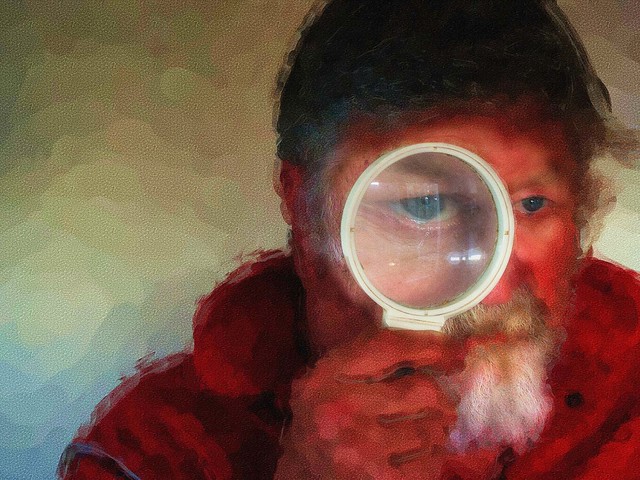
This was an accidental selfie. I was in my favourite spot for the afternoon light beside TheWindow. I stopped to finish my coffee, right in the shadow of the door frame, and didn't realize I set off the self-timer on my camera from my phone. The actual photo was lame but I decided to try it out in Google Deep Dream Generator, using a "modern art" style pattern.


I think the results are somewhere avant garde 1920ish.

Monday, April 27, 2020

A Surreal Selfie #photoproject

Le Violon d'Ingres


I got inspired whilst looking through Man Ray's photos (I was looking for but never found his Jazz series). He was a Dada &/or Surrealist artist and photographer who came to fame in Paris in the 1920's & 30's. His most famous image from that time is probably Ingre's Violin, but he was also a very successful fashion photographer and filmmaker after the war.

“It has never been my object to record my dreams, just the determination to realize them.”
...Man Ray


The object here is to take a "self portrait" (it doesn't have to include your face, could be just a shadow, an empty chair, your hands holding a camera, or a coffee cup!) that tells much more of your story than a standard head-shot selfie. What story do you want to tell? Perhaps it will be about your aspirations, what you have achieved, what you want to do after lockdown is over?


Short Black

Tuesday, April 02, 2019

On becoming A Lens Based Artist

#92/365 On Becoming a Lens Based Artist


Being a nice way to say I like to use photography creatively, and I'm not afraid of post processing

Friday, October 19, 2018

Yet another Reason to Photograph Art, rather than a scanner

PA180248I’ve been using the built in scanner in my HP Photosmart printer (an A4 typical all-in-one style inkjet) for my INKtober works. However yesterday’s included some Fluro acrylic paint to match my grand daughters pattern on her school art project (a hand painted mould of her hand), I a strang loop self reference sort or manner I decided to use that as my subject for my INKtober sketch for today,

I remembered that I had had trouble scanning the fluro colours before (on my beach people project) so I also took a photo (under artifical light). The differences are again shocking!

I probably should have waited for natural light and/or worked on the white balance but the camera (images on the right) gives a much better representation of the feel of my art work and closer to the true colours.

Scanned VersionPhotographed version

Saturday, July 14, 2018

Taking an Escher Inspired Self Reference into an Instagram selfie


The Journey towards a #MCEsherIspired #MirrorStyle #Selfie Triptych

What's going on in my instagram profile gridl?

This series is actually composed of 5 photographs some as blended layers, plus 3 others reimagined by Artificial Intelligent Networks looking for Escher woodcut styling (via Googles Deep dream generator). Looking at the triptych, we move from a single portrait of a phone, but masquerading as a pre-smartphone selfportrait (which is how we saw our serlf image before special media and smart phones). Then through the #strangeloop view of looking deep into a reflective virtual sphere, that I appear to be holding, to see my image again but now morphing into an artists marks and linework and back into a  conventional Instagram era selfie. Or is it?

Hints for the confused :: No filters where harmed (or even used) in the creation of these images, They are about self reference and paying homage to the wonderful vision of MC Escher

Friday, June 02, 2017

Sketching my digital cameras

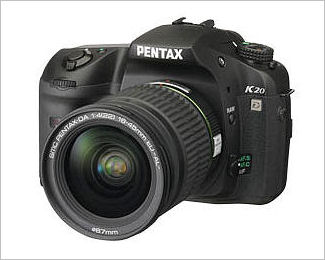
dreamscope deep dream after Van Gogh of me sketchingIn a bit of self reference fun I have been sketching by journey through digital photography, Starting with an old Logitech webcam (last used to make a short stop motion film), then my first real Digital Camera the little Olympus. Compact then my first Pentax, the Canon and now the bigger Pentax K20D. It just happened that when I was looking around for something to sketch they where there.I could see then a-fresh not as complex instruments/tools with lots of knob, buttons and dials by see them objectively as items catching the light. Perhaps there was a bit of objectivity creeping in as I love using these things. These represent almost 2 decades of digital imagery

You can see the latest incarnation of my daily sketches on instagram @oz_endless_summer


Old Logitech webcam dressed up in tripod legs in soft pencilOlympus C-4000 in brush pen and pencilPentax 100D in soft pencil


Canon 1100D in soft pencilPentax K20D in charcoal

Thursday, June 09, 2016

PhotoProject :: Recursive Self-Reference

It is close to a decade since I last attempted the one image three cameras trick, this time I wasn’t looking to create a screen wallpapers just a creative way to build some self-reference into an image about the changes in camera technology. Yesterday’s daily photo was a camera taking a set of selfportraits of itself as seen in the screen of my new tablet. A kind of spiraling droste effect of recursion, as much about composition as the cameras (the picture duplication devices) or use of layers in the post processing (the technique).

#160_WIN_20160608_21_28_16_Elegant_Recursion


I decided this photo needed to be reproduced through the eyes of other cameras, a self-referencing recursion,  a photographic quine, where each generation reflect the previous within its own bounds, a self coping replicant project. All you need is a camera that can display the photo it just took, and another camera to take its photo … … …

WIN_20160609_17_33_40_Pro-Recursion 1 _IGP5816-Recursion 2

And so on, till I reached today’s daily photo.

#161_MG_7598-Recursion 3

For a change there is more detail on the cameras used back in  my flickrstream

Monday, February 29, 2016

Looking @ Nothing

20160229_MG_0927_looking_at_nothing

Its 9:30pm on the last day of February and looking at nothing again! 
No Daily Photo yet!

Thursday, September 24, 2015

ArtInspired :: In Search of the Essence

Deep Dream "Extra Trippy" version of my SelfportraitMy search for what might be the essence of a subject or landscape bought me to  investigating google’s Deep Dream (aka Inceptionism) This is a fascinating bit of serendipity, some google researcher investigating how neural nets might learn to recognised objects in computer images were looking for ways to visual the way neural networks learn when they showed what was happening in the layers of the network starting with a base random noise image. The results are surprising, they include the embedded echos of things that are significant as the neural networks progressively classifies what is important in discovering the subject’s essence. These have variously been described as trippy and surreal dreanmimages (see the many echos of eye’s in the “Extra Trippy” version of my self-portrait on the right).The researchers have even publicly shared the code to do it, but for the less geeky of us I found a truly amazing website/service to help create this deep dream style of image called dreamscope.com. (its also available as an iPhone app)
Self Portrait :: In search of the Essence

Sunday, July 12, 2015

Back to the Future II

Having some fun with Pixlr on my phone
flickr have modified their snipet of html code when sharing an image to include a little java script that puts a hearder on the image to make it clear it came from flickr, the person's account it is taken from (me) and also shows a little watermark/overlay of the licence condition for sharing on the image.

Monday, October 13, 2014

ThePatch :: Self Portrait with a Unique Perspective

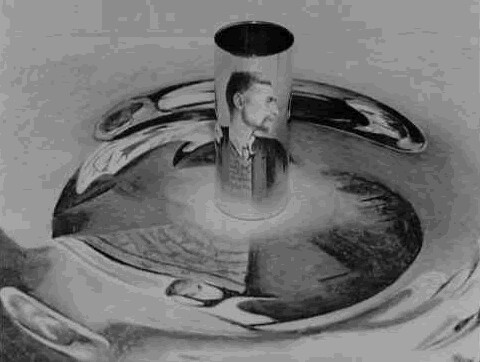
My plan to do all self portraits for this months ThePatach themes, gives me a lot of scope to be more artistically inspired with the curly topic of a unique perspective. I had been experimenting with conical mirror projects for my “handmade” little planets of the Queenscliffe Observatory and immediately thought of MC Escher’s Infinite Reflection. Yes its all done with mirrors, a cylindrical one, and an anamorphic transformation to produce the image the mirror is sitting on. The resulting image you see in the mirror appears to magically floating above the otherwise very distorted drawing on the table.

I started with a very simple front on self-portrait, rather than a profile, as in Escher's drawing. I deliberately keep the background and table simple and pretended to sketch. Then with a minimal tonal tweaking and a basic conversion to a greyscale, I had my starting image to transform. Whilst I wanted colour in the final photo I felt staying in grey tones for the reflection would be truer to Escher's concepts.

Whilst I do have a neat anamorphic transformation utility, called Anomorph Me, I don’t have a cylindrical mirror. What I do have is a stainless steel milk frothing jug and a stainless steel espresso cup. Now a coffee association is much more me anyway. So the first job was to work out roughly the right sizes to make the transformations.  I managed to get close on the first attempt. So far so good…
_IGP8892x npolar _IGP8892x-polar2
IMGP8913-001 _IGP8907
The stainless steel is not as clear as a true cylindrical mirror and also the items don’t have straight sides so the reflected images are not as sharp as Escher's and more obviously distorted. So out with a polishing rag and  back to make a new set of transforms this time with some conventional perspective shift to allow for the cup surface leaving out and the jug surface leaning in. For the final photos I had the cup filled with an espresso shot and the jug with frothed milk. I liked the one with the coffee best as it is a better self portrait of me (I love my coffee, I’m from Melbourne!) even though the reflected image isn’t quiet as clear. I think Escher would understand.


Saturday, July 26, 2014

Friday, March 21, 2014

Is Google actually taking any notice of itself?

imageThis amuses me, I decided to capture the google error screen message I always get now when I try to use the blog this button in picasa (don’t try I’m pretty sure it won’t work for you either.) While I was looking up google to see if others might have also reported this error, auto-backup swept up the screen capture and sent me a notice that the error message was ready to share. The attempt to share my actual photos was still in libo by the way and I had to resort to Windows Live Writer

#fail

Sunday, July 21, 2013

PhotoFriday :: Mobile Phone Photo

2013-05-19 17.58.48
In yet another bit of self reference, this is the artists manikin from my body clip, showing that he was photographed by my mobile phone and uploaded automatically to Drop Box, before being posted here.

For PhotoFriday‘s topic Mobile Phone Photo

Friday, September 07, 2012

PhotoProject :: Self Reference, Self Portrait 3 CameraPhones

self reference camerphone selfportrait taken using three camera phones
This self referencing attempt was more challenging than I have envisage, and less successful than I hoped. Primarily because of the degeneration of the image on the phone screen as it was photographed by the next phone. I’m still not sure if this is a limit with the marco capabilities of the phones or the difficulty they have focusing on the image on an LCD screen (my preferred explanation). The exercise also highlights how differently each phone handles white balance (seen as colour cast shift between screens).

So here is a semigraphic storyboard of how it was done
Noika 6120 Classic IMGP1575 My old Noika did not actually take this image but it was very much part of the original self-portrait
HTC Wildfire (Android Phone) 2012-09-04_16-08-12 My Android Wildfire was then used to take a photo of the Nokia, with the original self-portrait displayed
iPhone 3G IMG_0253 A borrowed IPhone was then used to photograph the Wildfire with the photo it had just taken.

I must admit I had immense troubles getting the iPhone to focus
Pentax 20D IMGP6006 All I I had to do to finish was use my Pentax to photograph the iPhone.

Simple really.